
Sewer Line Tunneling Under Henderson Slabs
Why the Main Sewer Under the Slab Fails
The building drain is the main line that collects waste from every fixture and carries it out to the city sewer or to the lateral in the yard. In a slab home, much of it runs under the concrete, sometimes from one end of the house to the other.
Cast iron and older ABS
Many Henderson homes from the 1970s through the 1990s, and older homes near the Townsite, often have cast iron or older ABS drains. Cast iron can corrode from the inside, scale up and crack over time. Older plastic drains can separate at joints or crack where the soil has shifted.
Bellies, separations and root intrusion
Expansive clays and ground movement are commonly cited reasons a drain loses its slope and forms a belly, a low spot where waste and water settle. Bellies cause repeat clogs that clearing alone will not solve. Roots are less common under a slab than in the yard, but they can enter where the building drain meets the outside line.
Whatever the cause, a failing main rarely fixes itself. Each backup can push wastewater into the soil under the house, and repeated clearing only buys time when the pipe itself has cracked or sagged.
How a Sewer Tunnel Replacement Works
Main line replacement is the largest kind of tunnel job we do, so planning matters more than anything else.
- Camera the full line. We run a sewer camera from a cleanout to record the condition and route of the drain, then locate it from above.
- Map the tunnel. We plan the entry point, tunnel path and where soil will be staged in the yard.
- File the permit. Where City of Henderson Building and Fire Safety requires a permit, it is filed before work starts.
- Tunnel and replace. The crew tunnels under the slab along the drain, removes the failed pipe and installs new pipe at proper slope.
- Inspect, backfill and compact. After testing and any required inspection, the tunnel is backfilled and compacted in layers and the yard is cleaned up.
Keeping the house usable
There will be stretches when drains are out of service, and we schedule those carefully. The inside of the home stays intact.
Proof before and after
Camera footage shows the old line before we start and the new line when we finish. Our sewer camera inspection service is also available on its own.
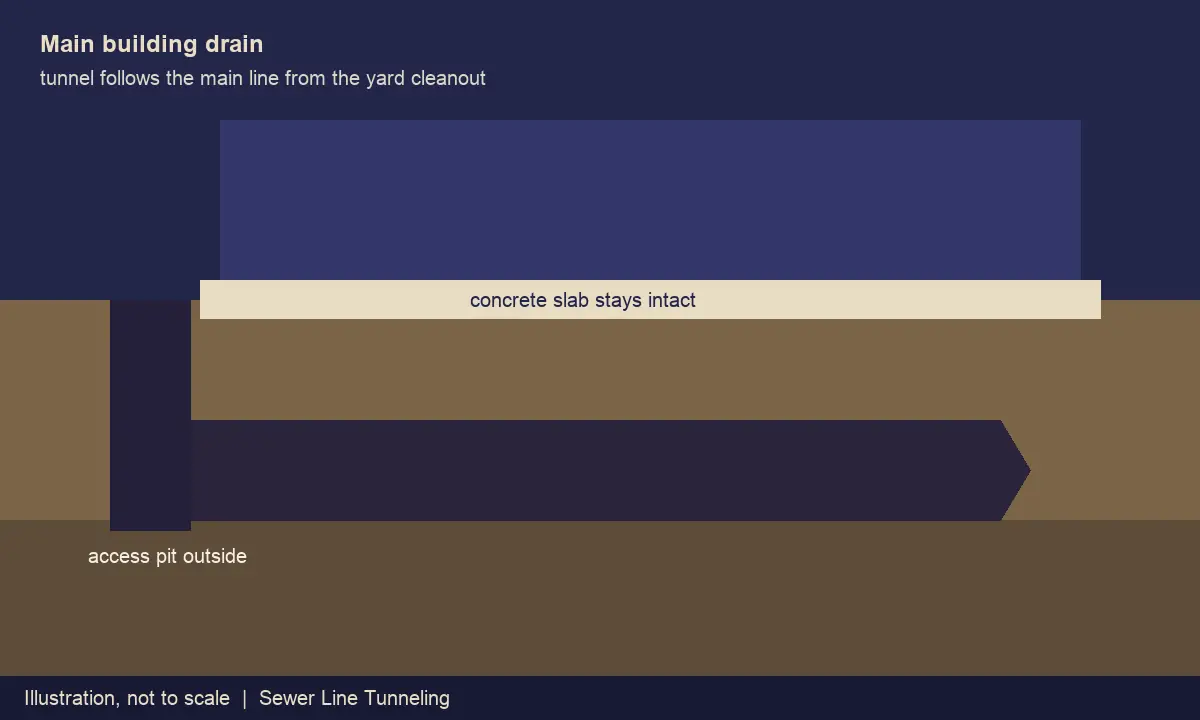
Tunneling Versus Opening the Floor for a Main Line
A main drain often passes under bathrooms, a kitchen, hallways and closets. Opening the slab along that path means removing flooring, fixtures and sometimes cabinets in several rooms.
What tunneling spares you
By working from outside and below, a tunnel avoids cutting through finished floors, matching discontinued tile, and moving out of rooms during the work. For most homes with a long run under living space, that trade is worth the extra digging. The yard is disturbed at the entry point and the tunnel is filled back in, rather than the house.
What tunneling asks of you
A tunnel for a full main line is a bigger excavation than a spot repair. You will have soil staged outside for a while, possible noise during the day, and, in HOA communities, the need to give notice or follow work rules. If a water line problem is also suspected, we can check it at the same time; our water line leak repair under the slab often pairs well with sewer work when the house is the same age.
We also talk through where the tunnel will start and how the yard will look while the work is underway, so there are no surprises on the first morning.
When Tunneling Is Not the Right Fix
There are situations where we would recommend something other than a tunnel, and we will say so plainly.
When only one short section has failed
If the camera shows one crack in an otherwise sound line, a targeted repair of that section may be all you need. That could still be a short tunnel, but it is a different, smaller job than replacing the full main.
When lining or interior access makes more sense
Some drains that are structurally sound but rough inside may be candidates for epoxy lining, which avoids digging. Lining is not a fit for bellies, collapsed sections or pipe that has lost its shape. If you are remodeling and the floors are coming up anyway, trenching from inside can be simpler. And if the trouble is really in a branch line rather than the main, our branch drain replacement work is the better match.
Sewer Tunneling in Henderson Neighborhoods
Older parts of town are where we most often find main drains near the end of their service life, though age is only one factor.
Older homes and older drains
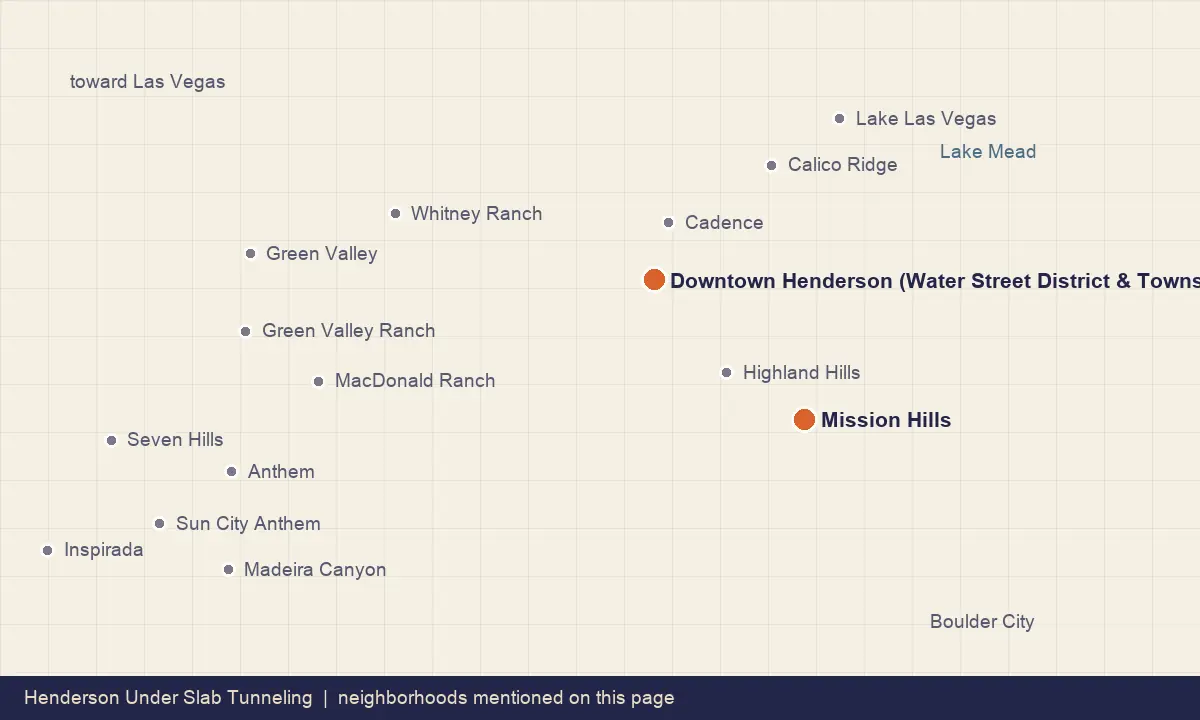
Some of the oldest plumbing in the city sits under homes in the historic Townsite near Water Street, where cast iron is often still in service. We also replace main lines in many Mission Hills homes from the 1970s through the 1990s, where repeat backups are often the first sign of a failing drain.
Getting started
The first step is a camera inspection so everyone can see the condition of the line. Common questions about permits, HOAs and timing are covered on our frequently asked questions about tunneling, and you can schedule a sewer line camera visit through our contact page.
Sewer Line Tunneling questions
How do I know my main sewer under the slab is failing?
The usual signs are backups in several fixtures at once, especially the lowest drains in the house, gurgling toilets after other fixtures drain, sewer odor indoors, and clogs that return soon after the line is cleared. These can also come from problems outside the house, so a camera inspection is the only reliable way to see whether the under-slab portion of the main line has cracked, separated or developed a belly.
How long does it take to replace a main line by tunnel?
A full building drain replacement by tunnel usually takes several days, depending on the length of the line, the depth of the pipe, and how hard the soil is to dig. Caliche can slow progress noticeably. Inspections and permit timing also play a role. We give you a schedule before we start and keep you posted if conditions underground change it.
Can I use my toilets and sinks during the work?
For part of the job, drains will be out of service while the old line is removed and the new one is connected. We schedule those windows ahead of time and keep them as short as practical. Because the work is under the house rather than inside it, you can generally stay home and use the rest of the living space normally while the tunnel crew works outside.
Is cast iron always a problem?
Not always. Some cast iron drains are still in serviceable condition after many years, while others have corroded, scaled or cracked. Age alone is not a reason to replace a line. A camera inspection shows the actual condition, and if your drain is still sound, we will tell you so. If only one section is failing, a targeted repair may be enough.