
Slab Leak Repair for Henderson Homes
What a Slab Leak Is and Why It Happens Here
A slab leak is a leak in a pressurized water line that runs under or through the concrete foundation. Because the line is always under pressure, even a small pinhole can run day and night, soaking the soil, raising the water bill and sometimes pushing moisture up into flooring and walls.
Copper lines under older Henderson slabs
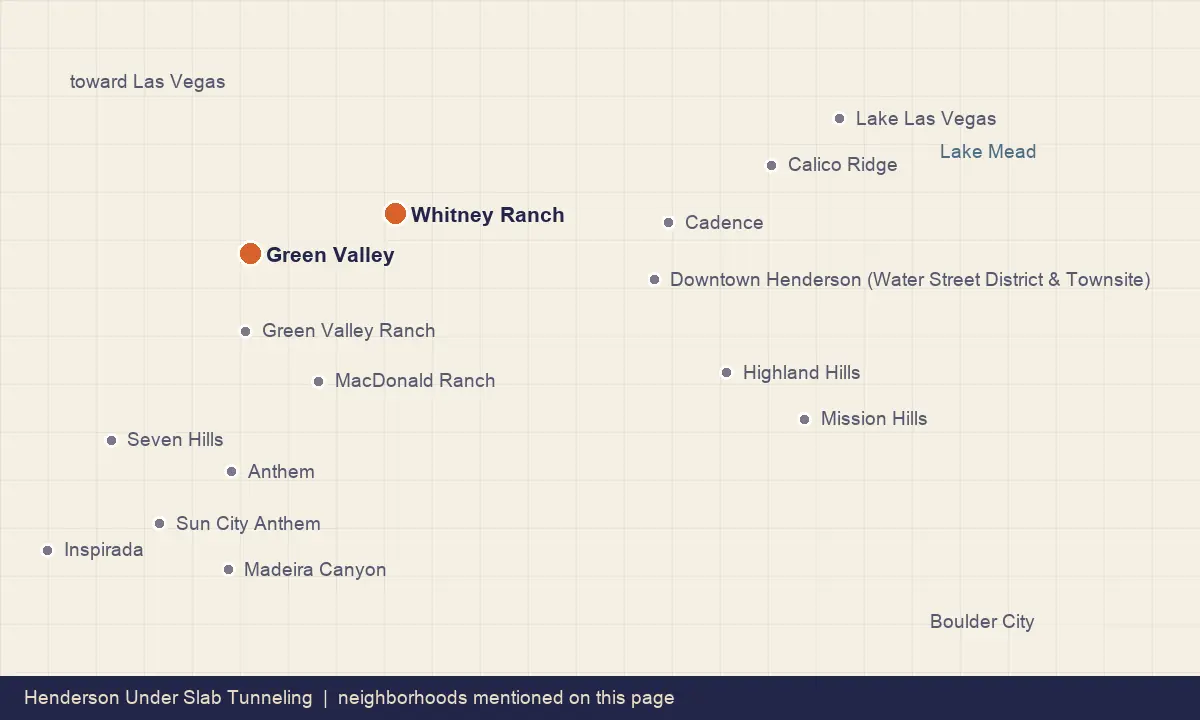
Many homes built from the 1970s through the 1990s, including much of Green Valley and Whitney Ranch, often have copper water lines under the slab. Copper can last a long time, but after decades of service it may develop pinholes, particularly where the pipe rubs against concrete, gravel or another line.
Hard water and ground movement
Southern Nevada water is hard, and some local soils include caliche and expansive clays. Hard water and soil movement are commonly cited contributors to pinhole leaks, though no single cause explains every case. Hot water lines tend to show trouble first, which is why a warm spot on the floor is one of the clues worth paying attention to.
How We Repair a Slab Leak
Our approach is built around one idea: confirm before you cut. The steps below describe a typical job, though your home may need more or fewer of them.
- Confirm and isolate. We pressure test the hot and cold sides separately to learn which line is leaking.
- Pinpoint the spot. Acoustic and thermal tools narrow the location so we can mark it on the floor plan and outside wall.
- Recommend a path. We explain whether a tunnel spot repair or a full reroute makes more sense, and why.
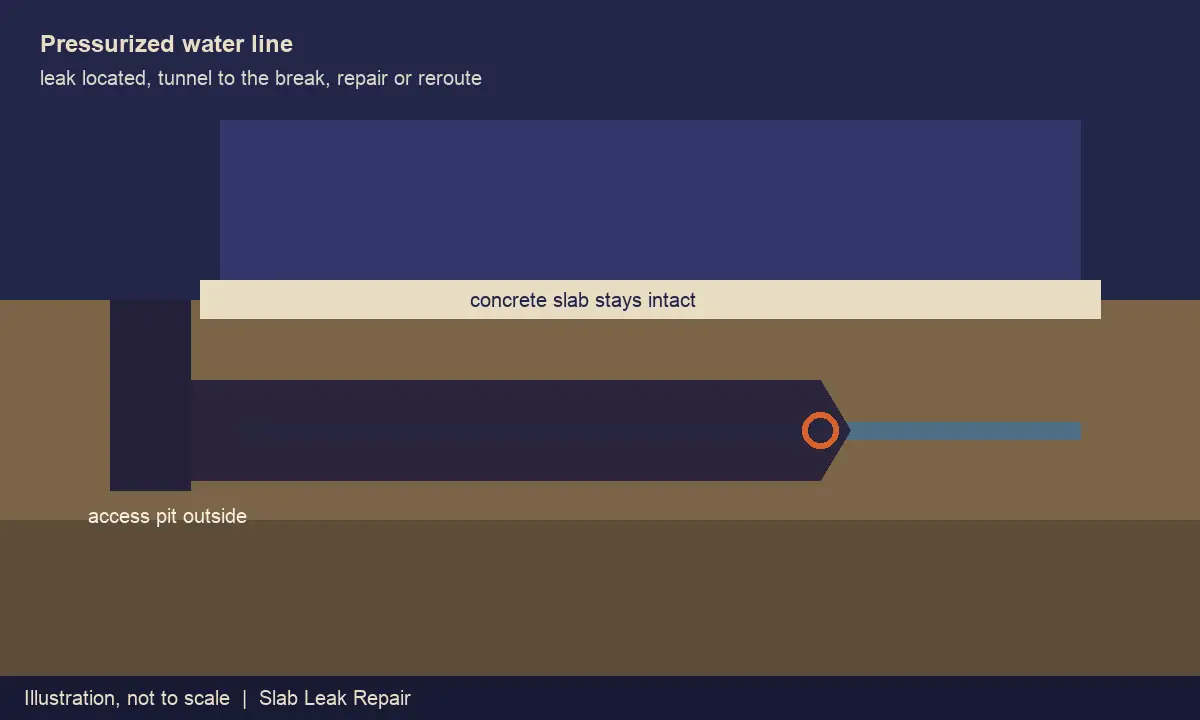
- Make the repair. Either we tunnel in from outside and replace the damaged section, or we run new line through walls or the attic and abandon the old pipe.
- Test and restore. The new line is pressure tested, the tunnel is backfilled and compacted, and the work area is cleaned up.
Why the location step matters so much
A precise location keeps the tunnel short and avoids exploratory digging. Our non-invasive leak location process is the foundation of every slab leak job.
Living in the house during repairs
Water may be off for part of a day, but most families stay home throughout, since nothing inside is torn up.
Spot Repair by Tunnel Versus a Full Reroute
There is no single right answer for every slab leak. We look at the age of the pipe, how many leaks the house has had, and what sits above the line before we recommend anything.
When a tunnel spot repair makes sense
If the rest of the line tests healthy and this is the first leak, repairing one section through a tunnel can be a reasonable, contained fix. It leaves the original layout in place and avoids opening interior walls. This is often the choice when the leak sits under tile, wood or cabinets that would be hard to replace.
When rerouting is the smarter long-term move
If copper has already leaked in more than one place, a second and third leak may follow. In that situation, abandoning the under-slab line and running new pipe overhead or through walls usually costs less over time than chasing leak after leak. A reroute does mean some drywall patching inside, so we talk through where those openings would land. Drain problems are a separate matter; if a camera finds a cracked waste line, our guide to replacing a failed drain branch explains that work.
When Tunneling Is Not the Right Fix
We tunnel a lot, but we do not think it is the answer to every slab leak. Being honest about that saves homeowners money and frustration.
Small leaks in easy places
If the leak is under a garage floor, a utility room with plain concrete, or flooring you were planning to replace anyway, cutting a small opening in the slab may be quicker and simpler than digging a tunnel from the yard. We will say so when that is the case.
Lines that are failing everywhere
When a copper system is pinholing throughout, tunneling to one spot only fixes today's leak. A reroute addresses the whole line at once. Likewise, if your home's main sewer is the real problem rather than a water line, a full sewer replacement under the slab may be the job to plan for instead. Tight lot lines, pools or structures right against the foundation can also make tunneling impractical, and we will tell you if access rules it out.
Slab Leaks Across Henderson Neighborhoods
Where you live in Henderson shapes what we are likely to find under the slab, though every house is its own case.
Older neighborhoods with copper under the slab
We see a steady share of copper pinhole leaks in slab leaks in Green Valley homes and among older houses around Whitney Ranch. In these areas, a homeowner who has already had one leak often asks whether a reroute is worth it, and that is exactly the kind of question we like to answer with test results in hand.
Questions to ask before you hire anyone
Ask how the leak will be located, whether a reroute was considered, who pulls the permit, and how the tunnel will be compacted. You can find more answers on our under-slab plumbing questions page, or request a slab leak evaluation and we will walk you through your options.
Slab Leak Repair questions
How do I know if I have a slab leak?
Common clues include a water bill that rises for no clear reason, the sound of running water with everything off, a warm area on the floor, damp flooring and a water meter that keeps turning when the house is quiet. None of these prove a slab leak by themselves. A pressure test and electronic leak location are the reliable way to confirm whether the leak is under the slab or somewhere else.
Is it better to repair the leak or reroute the line?
It depends on the condition of the rest of the pipe. If the line tests healthy and this is the first leak, a spot repair through a tunnel can be a reasonable fix. If the house has had several leaks or the copper is clearly worn, a reroute through the walls or attic is usually the better long-term choice. We explain the reasoning and let you decide.
How long does a slab leak repair take?
Many spot repairs by tunnel are completed in a day or two once the leak is located, although caliche, deep lines or a long tunnel can stretch that. Reroutes vary with the size of the home and how many fixtures are connected. Permits and inspections can add time on the calendar. We give you an expected schedule up front and update you if conditions underground change it.
Will my insurance pay for slab leak repair?
Coverage varies widely between policies. Many insurers treat the water damage and the cost of reaching the pipe differently from the pipe repair itself, and some limit or exclude slab leaks. Call your insurer, ask specifically how they handle slab leaks, and read your own policy. We can share test results and photos of what we found if your carrier requests documentation.